Choosing a mystery game for your kids is a puzzle in itself. There are too many formats, the reviews disagree, and you worry the youngest will get bored or the oldest will find it too easy. Yet family mystery games aren't reserved for one age group. The real question is the format and how you adjust the difficulty.
Board game mysteries: from age 6 or 7
Mystery board games (like Sherlock Holmes Consulting Detective for older players, or simpler picture-based mysteries for younger ones) present puzzles and ask players to read clues, sometimes illustrated. Younger kids love them because there's plenty of physical material to handle: cards, tokens, sheets.
For children aged 6 to 8, look for games where the suspense comes from drawings, colors or very visual puzzles (symbols, spotting differences between two pictures), without long text to read. At 9 to 11, kids can start reading longer texts and understanding deductive logic.
The advantage: no screen, short sessions, and a box that often holds several mysteries. The downside: nobody reacts to your theories the way a game master would, and once you know the solution, a mystery doesn't really replay.
Printable kits and paper games: flexible and cheap
Some publishers offer mysteries to download and print (often called "printable escape games"). They're ideal if someone at home likes to prepare games and handle the suspense like a game master.
These kits suit 7 to 8 year olds and up, because you can simply adjust the difficulty by removing some puzzles or giving more generous hints. The cost stays modest, and the same file can be printed again for another table.
The downside: someone has to host, read the rules and check the answers. This format is a good fit if that role appeals to you.
Physical escape rooms: from age 8 to 10 with an adult
A real escape room (you're locked in a decorated room and search it physically) can work from age 8 to 10 if the host adapts the scenario well. Some venues offer very well-designed adventures for kids.
For the youngest, choose a room with an attentive game master who can help discreetly. At 12 and up, most standard rooms become accessible. The budget is higher, since you usually pay per player, but it's a real outing that breaks up the routine.
The advantage: a real set all around you, a game master present, and real objects to handle. The downside: you have to travel and book a time slot, which leaves less flexibility.
Online escape games for families: 1 to 4 players
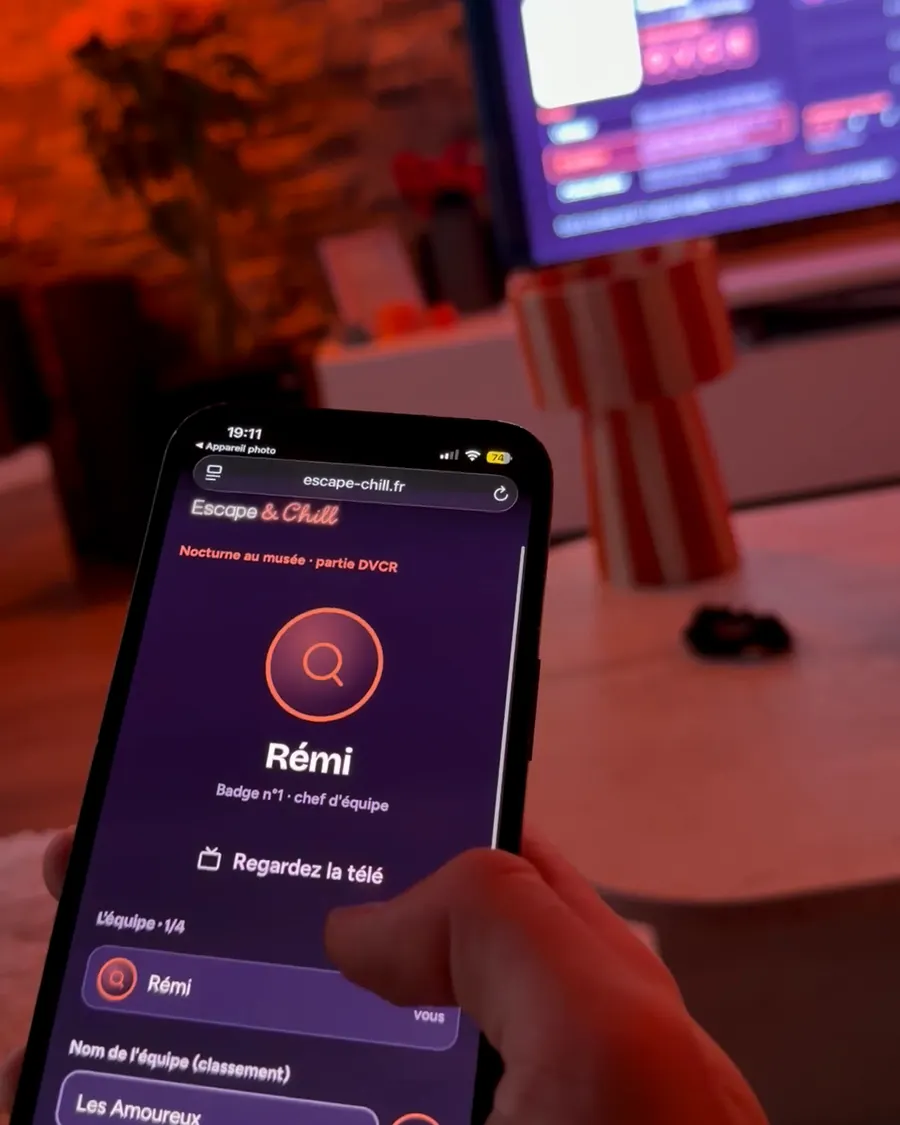
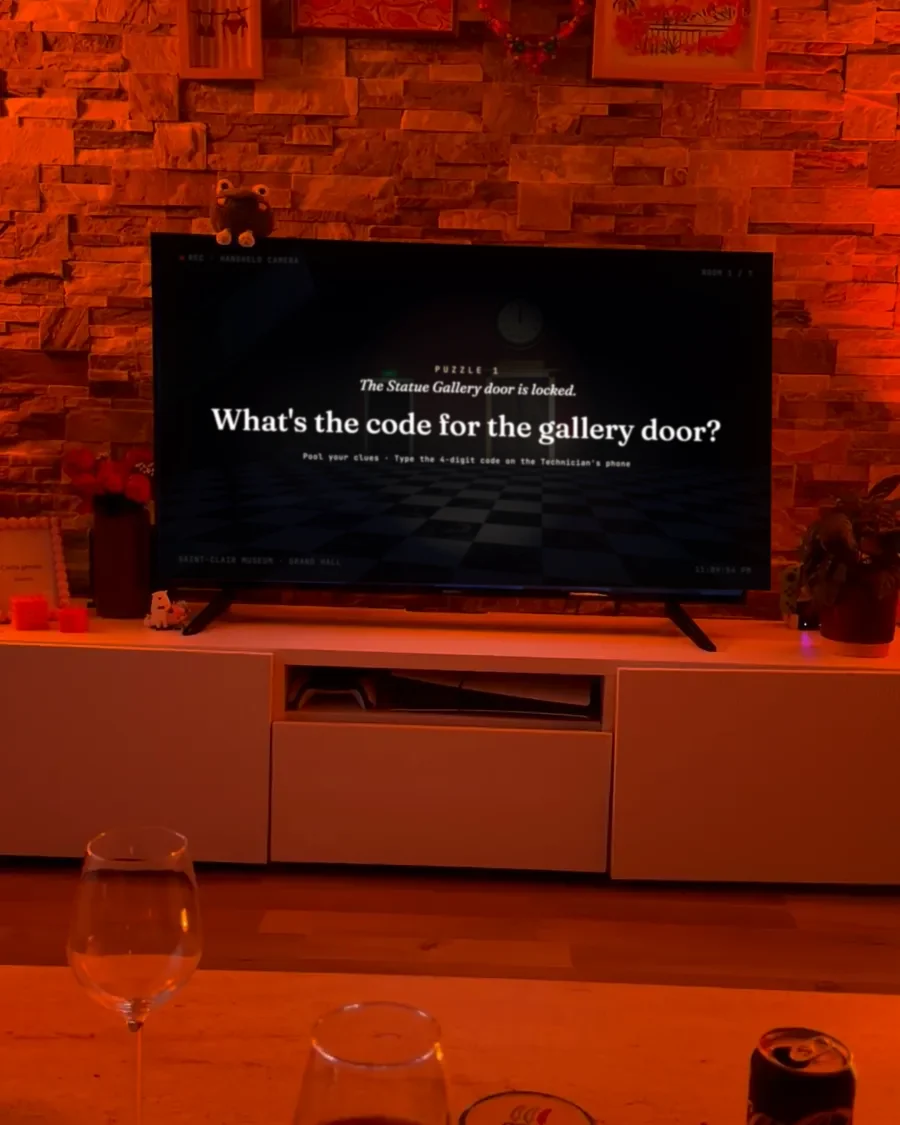
Digital escape games you play in front of the TV or a computer strike a good balance: you search and manipulate things for real, and nobody has to host. In some of them, like After Hours at the Museum, each player receives a role and clues the others don't have, so the puzzles only get solved when everyone puts their pieces together.
For ages 12 and up, this is the most suitable option. Younger children can play in pairs with an adult, sharing the same phone. After Hours at the Museum takes about 1.5 hours: not too short and not too long for a family evening.
You can choose the difficulty before you start. If the team finds a puzzle too hard, progressive hints let you move forward without giving everything away. It's also the best option if your family is spread out: remote play lets everyone play from home, talking by video call or phone.
The advantages: flexibility (no set time, the game can be paused and resumed later), a real story, and hints available at any time. The downside: it depends on the quality of the platform and a good connection.
How to choose a mystery by age: the key questions
Before you start, ask yourself these questions.
Who hosts? If nobody wants to be the game master, a board game or an online escape game is simpler than a paper kit you have to run yourself.
How much time do you have? A boxed mystery often takes less than an hour, a physical escape room fills an evening with the trip, and After Hours at the Museum takes about 1.5 hours. Choose based on your real availability.
Is the group mixed in age? With an eight-year-old and a fourteen-year-old, pick a format where the difficulty can be adjusted (an online escape game with several levels) rather than a board game with a single difficulty curve.
Do you want to be able to replay it? A mystery whose solution you already know quickly loses its appeal. An online escape game with several possible endings gives you a reason to come back, and the same game can be started again for another team.
What's your budget? A board game is bought once and stays on the shelf for years. A printable kit costs little, for one or two uses. A physical escape room is the biggest budget, since you pay for each outing. An online escape game like After Hours at the Museum costs €9.99 (launch price until October 31, then €12.99), paid once by the person who creates the games, with unlimited games.
Adjusting the difficulty and involving everyone
Whatever format you pick, what really works is calibrating the difficulty. An eight-year-old won't enjoy a complex logic puzzle the way a fourteen-year-old does. Luckily, most formats allow adjustments: fewer puzzles for the younger ones, one fewer hint for the older ones, more or less time.
Cooperative board games offer limited flexibility: you often have to accept the difficulty as it comes. Printable kits give you more freedom: you just remove or simplify a puzzle before you print. Online escape games usually offer several levels. After Hours at the Museum has three (Visitor, Investigator, Curator), chosen for the whole team at the start of the game.
Beyond the format, what matters most is that every child feels useful. When there are several roles (as in an escape game), even the youngest child will find something to do and something to notice. The teen who understands things quickly won't dominate if there's a child who notices the small details.
What we saw in testing. In mid-October 2026, during our first test sessions, three teams of two finished After Hours at the Museum in 1 hour 25 minutes, 1 hour 40 minutes and 2 hours 24 minutes, asking for between 4 and 9 hints. There are three levels to start with, and after three hints you can skip a puzzle and read the full explanation. See also the guide to a teen birthday party at home and the Christmas game night for the family.
The right option for you
If you're looking for an easy evening with a real story and puzzles that need teamwork, the online escape game suits families whose kids are at least 12, with younger children able to play in pairs with an adult. The Visitor level, the most accessible of the three, is a good choice for a first family game.
The decisive advantage: everyone has a different role (the Archivist, the Egyptologist, the Technician, the Musician), so everyone receives clues the others don't have and becomes useful at some point.
Other formats are just as good. They suit different wishes: a board game for a rainy Sunday, a physical escape room for a birthday, a paper kit if you like creating the atmosphere yourself. To get familiar with cooperative puzzles, also check out the types of escape room puzzles and how to solve them together.
The essential thing is to try it. On Escape & Chill, the first room of After Hours at the Museum is free: a good way to check whether the format appeals to your family before you pay. For more resources for families, see our family section.