A teen birthday party at home sounds easy. You're already at home, there's no room to book. But you have to keep about ten teenagers busy for three hours without the party turning into chaos or everyone ending up on their phones. Here is what works, what doesn't, and how to get started without stress.
Planning: two weeks ahead
Give yourself at least two weeks to organize a good party. Starting one week before makes it much harder.
Pick the day and time. A Saturday afternoon from 2 to 5 PM works well. Lunch is over, the teens are usually free, and you don't have to serve a full meal. Parents pick them up before dinner.
Make the guest list. At this age, the teen chooses who gets invited, but you set the number. Around ten guests is usually the right balance. Too many and you lose control. Too few and team games become painful.
Set a realistic budget. A small amount per person for snacks and drinks, plus a separate envelope for one or two activities. You can throw an excellent party for twelve teens without going broke. Spending more doesn't guarantee a better party: the energy and the activities matter far more than the price tag.
Setting up the space
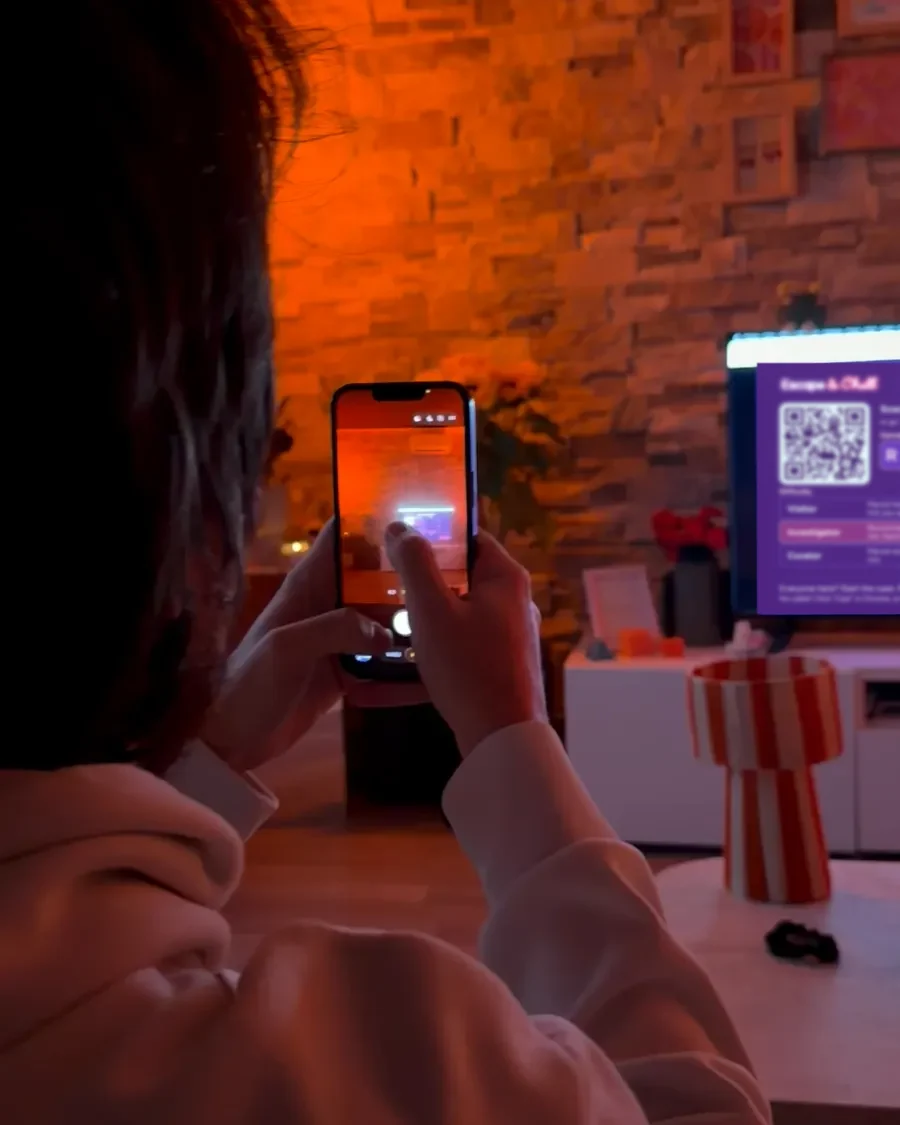
Three days before, prepare the space. Clear the living room or the family room, close the bedroom doors, and put away anything you don't want touched. You need a table for snacks and drinks, an open area for games and, ideally, a TV or screen for activities.
Prepare the snacks: chips, peanuts, candy, cake. Don't order catering or cook for three days. A quick stop at the bakery that morning, some fruit and homemade popcorn are enough. At this age, quantity matters more than polish. For drinks, offer juice, soda and water, and no alcohol.
Test your Wi-Fi. If you're running a game or a video, the connection has to hold with a dozen phones online at once. Check it an hour before the guests arrive.
Announce the schedule. Tell the teens what's going to happen ("2 PM arrival, 2:30 game one, 3:30 cake break, 4 PM game two"). A clear structure puts them at ease.
The run of show: three hours of content
2 PM: arrival. People settle in without pressure. Some come early, some late. Put some music on and let them move around. The cake can wait.
2:30 PM: game or activity one. At this age, improv works well once the mood is already warm. You can also bring out a competitive board game or a video game.
3:30 PM: cake break. You serve, the teens eat, and the stories start flowing. It's your moment to catch your breath and check that everything is going well.
4 PM: game or activity two. Something physical or creative after sitting for a while. Or a game that brings the whole group together.
4:45 PM: a gradual wind-down. Let the teens hang out, and some will start checking their phones. The first parents usually arrive around 5 PM, and that's normal.
This simple structure works because it creates a rhythm without being rigid.
Activities that work
Competitive board games hold attention (Ticket to Ride, Catan). Pick one that's short enough for everyone to take turns.
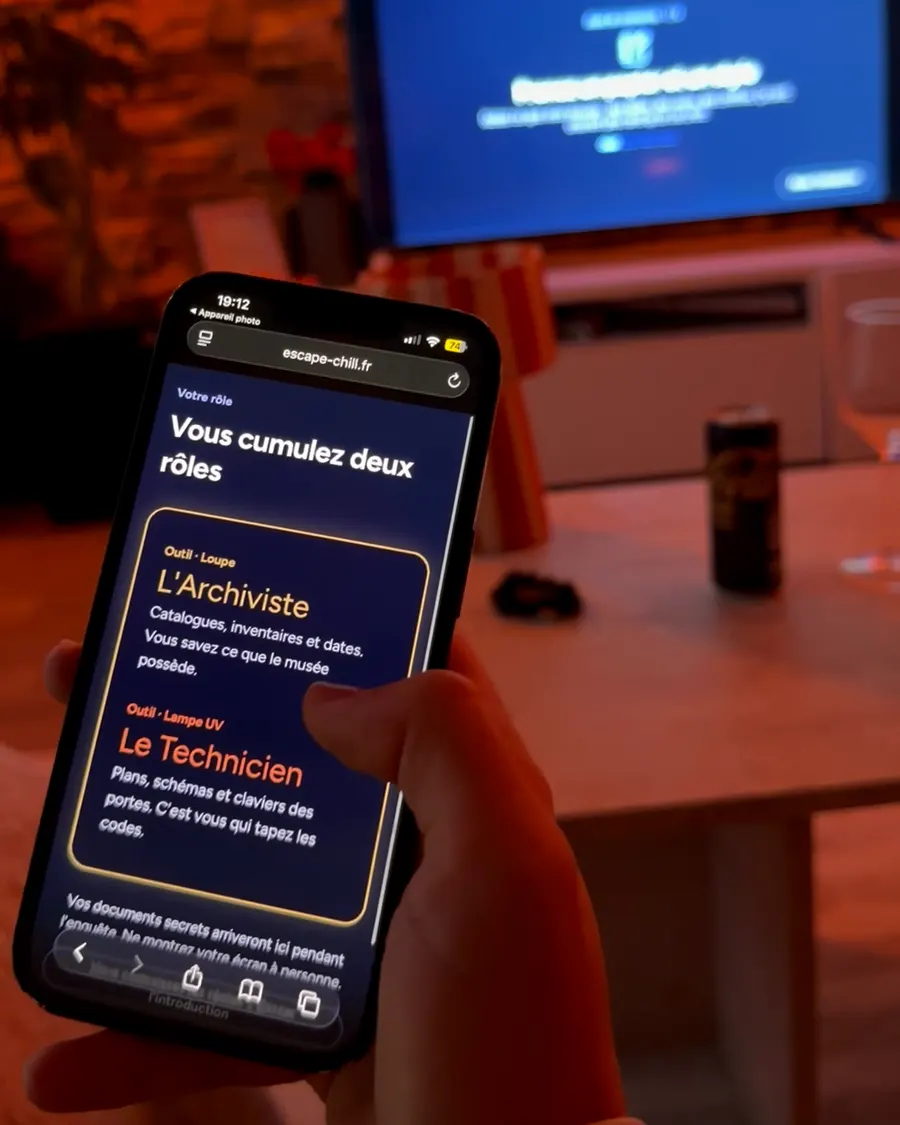
A home escape game holds a group's attention fast: a boxed game on the table, a printable kit hidden around the apartment, or a game on the TV with phones. With about ten guests, split into pairs and give the others a separate activity. Count one to two hours depending on the game, with a break for cake. For a birthday, it fills the evening: suspense, big laughs, and the whole group around the same puzzle. Our comparison of formats can help you choose.
Improv works if someone launches it with a bit of structure. Give each team a setting (a restaurant scene, a plane with engine trouble, a shop that has been closed for 30 years) and let them improvise for 10 minutes. The laughs come fast, and hidden talents show up.
A quick creative workshop: fabric paint on T-shirts, group drawing, friendship bracelets. Everyone leaves with what they made. It takes 30 to 45 minutes and gives the group a real break.
A challenge game: karaoke (there are plenty of free versions on YouTube), a TikTok dance challenge, a choreography to learn together. Film it without worrying about quality, then watch the videos together. Those moments stick.
A creative card game like Dixit, where everyone matches an image to a clue and votes to find the storyteller's card. No prior knowledge needed, and the laughs keep coming.
Avoid activities that isolate people: solo video games, a movie, anything that needs too much concentration. At this age, they want to be together and to be seen.
Handling slow moments and tension
Somewhere near the end of the party, around 4:30 PM if you started at 2, the energy drops on its own. Some teens start looking at their phones, and others get tired. That's normal. Your job isn't to keep the excitement going nonstop, but to create a space where they can relax without feeling awkward.
A good technique: offer a cake break or a calmer moment around 3:30 PM, when everyone can move around freely. Then relaunch with one last activity at 4 PM, something that takes less mental effort. A light video game, a simple challenge, conversations that drift naturally. Tension rarely comes up at a well-run party, unless two teens are in open conflict. In that case, quietly separate the groups.
Common mistakes
Don't overload the schedule. Three well-run activities are better than seven that fall flat.
Don't force team games if the group is small (fewer than eight teens). Let them split into pairs naturally.
Don't let it run too late. After 6 PM, some will want to head to another friend's place, others will ask to sleep over, and you'll have to say no.
Don't disappear into the kitchen for too long. A discreet presence is enough. Someone who keeps an eye on things, welcomes latecomers, and restarts a game that's losing steam.
Don't count on a teen to run the party. You're the adult: you start things, restart things, and sort out tension. The teens will take over on their own if the activity really appeals to them.
Budget for twelve teens
- The cake: homemade or from the bakery. It's often the first expense.
- Drinks and snacks: the item that grows fastest with the number of guests. Choose savory snacks to share rather than individual portions.
- The activity: a board game, a home escape game or a creative workshop kit. A game you keep afterward is a good investment.
- Decorations: optional. A few string lights and some soft lighting are enough.
Make a list, price it at the stores you usually shop at, and set a ceiling before you start buying. You can spend more if you hire an outside entertainer, but it really isn't necessary. What creates the atmosphere is you, not the money you spend.
On the day: stay calm
One hour before the guests arrive, check the music, the cake, the snacks, the TV if you need it, the bathroom, and the clear space.
Welcome the first teens without panic. Start a game. Watch how it goes. Step in if something loses steam (a quiet team, two kids who are bored), and restart it. That's all.
The best teen birthday parties aren't the ones with the most expensive entertainment. They're the ones where an adult took the time to create a setting where young people feel good together for a few hours. It can happen in your living room, with a cake from the bakery and a good game. The rest is up to them.
If you're looking for more party ideas, see our birthday party page and how it works. Our pricing is simple: one purchase, and the other players join for free. On the blog, you can also read game night ideas for adults and our advice on mystery games for kids by age.
Escape & Chill (we make it)
We make Escape & Chill, an escape game played on the big screen (a computer connected to the TV). Each player joins with their phone, searches the room with their flashlight, and gets clues the others don't have. The first game, After Hours at the Museum, is for 1 to 4 players (in pairs for larger groups), takes 1.5 to 2 hours, and you can pause in the middle. The first room is free.
What we saw in testing. In mid-October 2026, during our first test sessions, three teams of two finished After Hours at the Museum in 1 hour 25 minutes, 1 hour 40 minutes and 2 hours 24 minutes, asking for between 4 and 9 hints. The teams read their clues out loud the whole time, which is exactly what keeps a group of teens busy. See also our guide to mystery games by age and how to host an escape game at home.